

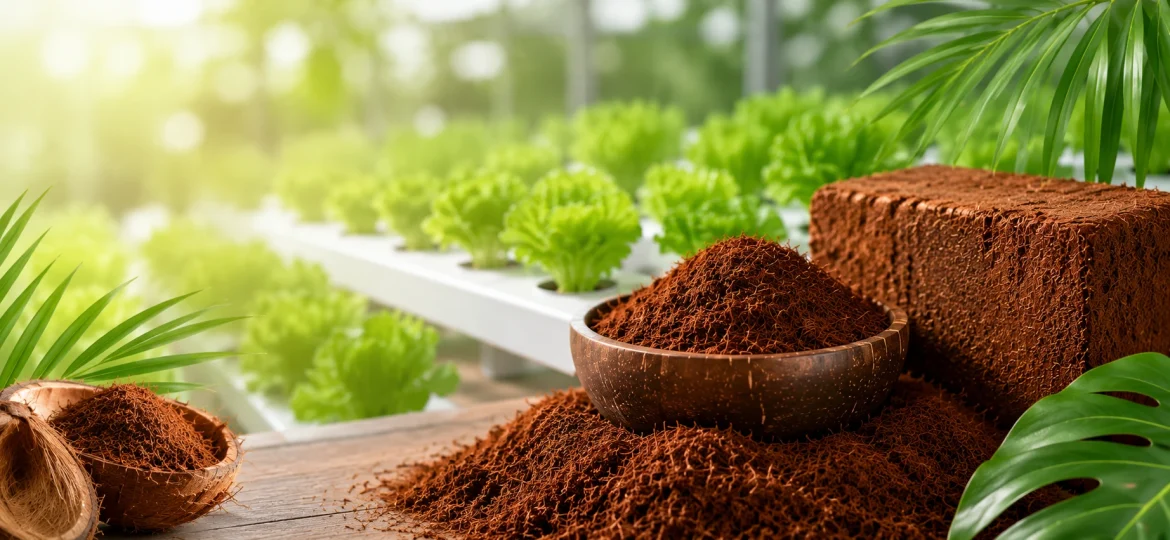
Coco Peat: Benefits, Uses and a Practical Hydroponic Growing Guide
If you've spent any time browsing grow shops or hydroponic suppliers, you've probably come across bricks of compressed brown fiber labeled "coco peat" or "coir pith." It's become one of the go-to growing mediums for everyone from balcony gardeners to commercial greenhouse operators, and for good reason - it holds water well, lets roots breathe, and it's easy to handle. But not all of it is created equal, and using it well takes a bit more thought than just soaking a brick and tossing your seedlings in.
This guide walks through what coco peat actually is, why growers rely on it, how to get it ready for use, and where it fits into a hydroponic setup.
What exactly is coco peat?
Coco peat - also known as coir pith or coco coir pith - is made from the soft, spongy material found inside coconut husks once the tougher fibers have been stripped away. Instead of acting like soil, it works more like a support system: it gives roots something to anchor into, keeps moisture close by, and leaves enough air pockets so roots don't suffocate.
That's an important distinction. Coco peat isn't a soil substitute in the sense of providing nutrition - it's closer to a physical foundation for plants to grow in.
That's why you'll see it used across so many different setups:
- Pots and containers
- Seedling nurseries and propagation trays
- Greenhouses
- Grow bags
- Vertical growing towers
- Hydroponic and other soilless systems
How well it performs really comes down to how it was processed. A well-washed, properly buffered, correctly graded batch behaves very differently from a cheap, unrefined one - especially if you're growing something sensitive to salt buildup.
Where does coco peat come from?
It starts with coconut husks, which get broken down into a few separate byproducts during processing:
- Coir fiber (the long, tough strands)
- Coco chips (chunkier bits used more like bark)
- Fine pith - this is what becomes coco peat
The pith is then dried, screened and packaged for growers. It's essentially a leftover product from coconut processing that's found a second life in agriculture - a nice example of turning waste into something useful.
"Made from coconuts" doesn't automatically mean "good quality." Before trusting it with a sensitive crop or a hydroponic system, it's worth checking a few things first.
- Electrical conductivity (EC)
- pH level
- Particle size and grade
- How much water it holds
- Air space once wet
- Residual salt content
- Whether it's been washed and buffered
- How consistent it is batch to batch
Why growers like using it
- It holds moisture without drowning roots
Good coco peat strikes a balance - it keeps water available to roots while still leaving air pockets so they don't sit in a soggy mess. That said, this doesn't mean you can water on autopilot. You'll still need to adjust how often and how much you irrigate based on the plant, the container, and the climate you're growing in.
- Roots get to breathe
Because of its porous, fibrous texture, coco peat leaves plenty of air gaps around the root zone. This kind of aeration matters a lot in soilless growing, where you're controlling water and nutrients directly rather than relying on natural soil processes.
- It's light and easy to work with
Compared to regular garden soil, it's noticeably lighter, which makes it a practical choice for grow bags, nursery trays, rooftop gardens, vertical setups, and indoor growing where weight and mess matter.
- Roots get solid physical support
Even without soil, plants still need something stable to root into. A properly structured batch gives roots room to spread while holding them in place - which matters just as much in a hydroponic tray as it does in a plant pot.
- It works well in soilless systems
Rather than relying on soil for anchoring, growers can build a root zone entirely out of coco peat and feed the plant through irrigation or a nutrient solution instead.
- It's a renewable, coconut-derived resource
Since it's made from a coconut industry byproduct, using it responsibly is a fairly efficient way to put agricultural waste to good use.
Common ways coco peat gets used
In pots and garden beds: home gardeners mix it into potting soil or use it on its own to lighten the mix and improve moisture control, especially for seedlings and ornamentals.
For starting seeds: its fine texture makes a gentle environment for young roots, though it needs to be clean and evenly moist - not soggy - for germination to go well.
In nurseries: its light weight and adaptability make it a popular base for propagation trays and container production.
In grow bags: coco-based media are a common choice for protected cropping, though the exact blend should match the crop and irrigation setup rather than assuming one formula fits everything.
In hydroponic systems: coco peat is also used as a substrate in certain hydroponic setups. INHYDRO, for instance, lists cocopeat as one of several substrate options - alongside rockwool and Hydroton - in its commercial NFT systems. Worth noting, though: coco peat itself isn't a hydroponic system. It's simply one of the growing media that can be incorporated into a soilless or hydroponic setup.
How coco peat fits into a hydroponic setup
Hydroponics, at its core, means growing plants without traditional soil while managing water and nutrients directly. In substrate-based hydroponic systems, coco peat handles the physical side - anchoring roots and holding moisture - while the irrigation system takes care of feeding.
A quality substrate can offer:
- A stable place for roots to grow
- Reliable moisture retention
- Enough aeration to keep roots healthy
- Consistent structure batch after batch
- A medium that nutrient solution can move through easily
The specifics vary depending on the system and crop. INHYDRO's indoor NFT system, for example, uses net pots that can be filled with cocopeat, rockwool, or Hydroton, and is used to grow crops like lettuce, basil, spinach, kale, microgreens, and strawberries. Cocopeat also shows up as a substrate option in INHYDRO's hydroponic wall systems.
Getting coco peat ready for hydroponic use
If you've bought a compressed brick, it needs some prep before it's ready to go into your system.
1. Rehydrate it
Add clean water to the compressed block and let it expand. Once it's loosened up, break it apart so the texture is even throughout.
2. Check it over
Before putting it to work, check the EC, pH, particle consistency, and general cleanliness. This step matters because leftover salts can throw off your nutrient program down the line.
3. Wash it if needed
Depending on how it was processed, you may need to rinse it to flush out excess salts. Not every product needs this step - check the supplier's instructions and test it if you're unsure.
4. Buffer it if needed
Some coco-based substrates benefit from buffering to make them better suited to a particular crop or nutrient program. Commercial growers should lean on the supplier's guidance and their own agronomy plan rather than treating every batch the same.
5. Load it into your system
Once it's prepped, fill your containers, grow bags, or net pots - just don't pack it down too tightly, or you'll lose the air space roots depend on.
Using coco peat for everyday container plants
For general container gardening, you can use it on its own or blend it with other materials depending on what you're growing. A common approach is mixing it with perlite, compost, or other substrates to fine-tune:
- Drainage
- Aeration
- Moisture retention
- Nutrient availability
- Overall stability
There's no universal recipe here - the right blend depends on the plant. For commercial growing, it's better to build the mix around what the crop actually needs rather than following a one-size-fits-all ratio.
Blending coco peat into regular soil
You can also mix coco peat directly into soil to change its physical properties. Expand and prep it first, then work it into the soil based on what your plants need.
The goal isn't to cram in as much coco peat as possible - it's to find the right balance between water retention, drainage, aeration, and root support. For plants that don't like sitting in moisture, going overboard with a water-retentive additive can actually work against you.
Does coco peat count as fertilizer?
No - and this is a common misconception. Coco peat's job is to be a growing medium, not a nutrient source. Plants still need a proper feeding program to support growth, root development, flowering, and fruiting.
What does "low-EC coco peat" mean?
EC, or electrical conductivity, is essentially a measure of dissolved salts in a growing medium or nutrient solution. In hydroponics, keeping substrate EC in check matters because too much salt can interfere with how well plants take up nutrients.
That's why low-EC coco peat tends to be the preferred choice when growers want tighter control over the root zone. That said, lower isn't automatically better in every case - the right EC range depends on your crop, water quality, nutrient program, and overall system. It's worth checking substrate specs against your own agronomy requirements rather than chasing the lowest number possible.
Coco peat vs. soil
Neither one is objectively better - they just serve different purposes.
| Feature | Coco Peat | Soil |
|---|---|---|
| Water retention | High, depending on grade | Varies |
| Aeration | Generally good when properly structured | Varies |
| Nutrient content | Limited - needs to be supplied | Naturally present, depending on soil type |
| Weight | Lightweight | Generally heavier |
| Control | Greater control in soilless systems | More dependent on natural soil traits |
| Hydroponic use | Well suited for substrate-based systems | Not typically used as the root medium |
| Reusability | Possible with proper care | Depends on use |
For everyday backyard gardening, plain soil is often the simplest option. But for controlled-environment and substrate-based growing, coco peat gives you a lot more say over what's happening in the root zone.
Coco coir vs. coco peat - what's the difference?
These two terms often get used interchangeably, but technically they refer to different parts of the processed husk. Coco peat usually means the fine, pith-like material, while coco coir is a broader term that covers coconut fiber and coir-based products more generally. Processing coconut husks yields a few different grades - fiber, chips, and fine pith - and which one you need depends on what you're using it for.
Coco peat vs. peat moss
Both are used as growing media, but they come from completely different sources. Coco peat comes from coconut husks, while peat moss forms from partially decomposed organic matter that accumulates in peat bogs over long periods. Coco peat tends to appeal to growers who want a renewable, coconut-based alternative with solid moisture retention and airflow. Which one is "better" really depends on your crop, budget, availability, and how much you care about the environmental sourcing side of things.
Downsides worth knowing about
Coco peat has a lot going for it, but it's not automatically the right fit for every situation:
- Quality varies a lot between suppliers
- Cheaply processed batches can carry excess salts
- It offers no real nutrient value on its own
- Overwatering becomes an easy mistake if irrigation isn't dialed in
- Some products need washing or buffering before you can use them safely
- Its structure can break down over repeated use
- Controlled systems still require you to keep an eye on the root zone
None of this means you should avoid coco peat - it just means picking a decent grade and managing it properly.
How to pick a good batch
Don't just grab the cheapest bag on the shelf. A little supplier due diligence up front saves a lot of guesswork later.
Look for suppliers who can tell you about:
EC - ask for test data or specs if you can get them.
pH - it should suit whatever system you're growing in.
Particle size - different crops and systems call for different grades.
Washing and buffering - find out if it's already been done, or if you'll need to do it yourself.
Consistency - for commercial growing especially, batch-to-batch variation can throw off your whole irrigation and feeding schedule.
Application - match the product to your crop and setup instead of buying something generic and trying to make it work.
Why the growing medium matters so much in hydroponics
In a hydroponic setup, everything hinges on carefully managed water and nutrient delivery. The substrate shapes the physical root environment, while your irrigation and nutrient system controls how water and food actually reach the plant. That means picking a growing medium isn't a decision made in isolation - it needs to work alongside your crop choice, irrigation design, nutrient program, water quality, climate, and how you're monitoring the root zone.
INHYDRO's hydroponic systems bring these pieces together - growing infrastructure paired with controlled irrigation and nutrient management - and list crop-specific pH and EC ranges, with cocopeat as one of the available substrate choices.
Is it viable for commercial hydroponic farming?
Yes - coco peat is a legitimate option for commercial hydroponic and soilless operations, but whether it's the right call depends on your crop, system design, and the specific substrate you're using. INHYDRO, for example, includes cocopeat as a substrate option in its commercial NFT systems.
For a commercial operation, though, the growing medium is just one piece of a much bigger puzzle. You'll also want to think through:
- Your greenhouse or indoor environment
- Irrigation design
- Filtration
- Nutrient dosing
- pH and EC monitoring
- Crop selection
- Drainage and recirculation
- Overall farm management
This kind of whole-system thinking becomes especially important once you're scaling up from a hobby setup to a commercial operation.
Frequently asked questions
What is coco peat used for?
It's used as a growing medium for houseplants, seedlings, container gardens, nurseries, grow bags, soilless setups, and some hydroponic systems.
Is coco peat good for plants?
Generally, yes - as long as it's prepared correctly. It offers solid moisture retention, aeration, and root support, but plants still need proper feeding on top of that.
Can plants grow directly in coco peat?
Yes, some crops do well planted straight into it, particularly in soilless setups - though it usually needs some prep and a proper feeding schedule to go with it.
Is coco peat good for hydroponics?
It can work well in substrate-based hydroponic systems, though results depend on crop choice, substrate quality, irrigation, and how the nutrients are managed.
Does coco peat contain nutrients?
Not in any meaningful amount - it shouldn't be relied on as a fertilizer. Nutrients need to come from a proper feeding program.
How often should I water it?
There's no fixed schedule that works for everyone. It depends on the crop, container, substrate condition, climate, and overall system.
Can I reuse coco peat?
Sometimes, yes - but it depends on the crop, the substrate's condition, and whether it's been properly cleaned and prepped between growing cycles.
Is coco peat better than soil?
Not universally - it depends on the situation. Coco peat gives you more control in soilless growing, while soil is often the more practical option for everyday gardening.
Choosing the right growing setup
Picking a growing medium is just one part of building a successful hydroponic operation. The right choice depends on your crop, available space, scale, climate, irrigation method, and how automated you want things to be. INHYDRO works across hydroponic farming and controlled-environment agriculture - including commercial NFT systems, vertical growing setups, and other farm infrastructure - and can help you figure out what fits your project.
