

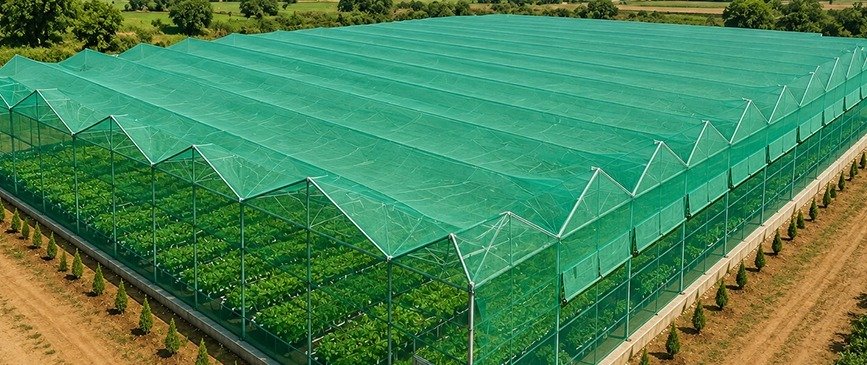
Net House Cost for 1 Acre in India — Full Breakdown 2026
If you are planning to build a net house on your farm, the very first question that naturally comes to mind is simple — how much will it cost?
Understanding the total construction cost is one of the most important steps before starting any net house farming project. Farmers need a clear estimate of investment requirements, material costs, subsidy benefits, and long-term returns before making a decision.
In this complete guide, you will learn the full cost breakdown for building a 1-acre net house in India in 2026. Every major component involved in construction will be explained in detail, including the structural frame, net material, irrigation system, foundation work, labor charges, and additional installation costs.
You will also understand how government subsidy schemes reduce the actual investment amount for Indian farmers. The subsidy calculations, estimated farmer contribution, and approximate total project costs will be explained step by step so you can plan your investment with confidence.
By the end of this guide, you will have a realistic understanding of the total cost required to build a 1-acre net house in India and whether protected cultivation is the right investment for your farming goals in 2026 and beyond.
Why Net House Costs Vary Across India
Many farmers become confused when they hear completely different construction prices from different contractors and suppliers. One contractor may quote ₹8 lakhs while another may estimate ₹20 lakhs for a similar project.
This difference happens because the total cost of a net house depends on several important factors including structure type, material quality, location, and irrigation setup. Understanding these factors helps farmers estimate their actual investment more accurately before starting construction.
– Type of Structure
The type of net house structure has the biggest impact on total cost. A basic wire rope shade net house generally costs around ₹300 to ₹400 per square meter, while a full GI pipe insect-proof net house may cost ₹600 to ₹800 per square meter depending on design and specifications.
– Quality of Materials
High-quality GI pipes and UV-stabilized net materials increase the initial project cost but provide much better durability and lifespan. Cheaper materials may reduce upfront expenses but often lead to higher maintenance and replacement costs later.
– Location in India
Construction costs vary across different Indian states and districts due to differences in steel prices, transportation charges, labour costs, and material availability. Farmers should always collect quotations from suppliers and contractors operating in their local region.
– Size of the Structure
Larger net house projects usually have a lower cost per square meter because several fixed costs such as transportation, labour setup, and machinery are distributed across a larger cultivation area.
– Irrigation System
The type of irrigation system installed inside the net house also affects the total investment. A basic drip irrigation setup costs less, while automated fertigation systems with filters, dosing units, and automation equipment increase project expenses.
– Contractor Experience
Experienced net house contractors may charge higher installation fees, but they generally provide better structural quality, proper engineering, and longer-lasting construction. Poor-quality installation often results in expensive repairs and maintenance problems later.
Standard Rate for Net House Construction in India 2026
The average market price for a quality GI pipe insect-proof net house in India during 2026 is approximately:
₹700 per square meter
This estimated cost generally includes the GI pipe structural frame, insect-proof net material, foundation work, labour charges, and a basic drip irrigation system.
Base Calculation for 1 Acre
1 acre of land is approximately equal to 4000 square meters.
4000 sqm × ₹700 = ₹28,00,000
This means the estimated total project cost for constructing a 1-acre GI pipe insect-proof net house in India is approximately ₹28 lakhs before applying any government subsidy benefits.
Complete Cost Breakdown — 4000 sqm at ₹700 per sqm
| Component | Sub Items Included | Percentage | Estimated Amount |
|---|---|---|---|
| GI Frame and Structure | Vertical pipes 60mm, Horizontal pipes 40mm, Bracing, Hardware, Anti-rust coating | 35% | ₹9,80,000 |
| Foundation and Labour | Digging, Concrete work, Frame labour, Net fixing, Door fabrication | 25% | ₹7,00,000 |
| Net Material | 50 mesh UV net, Aluminum profiles, GI clamps, Door net panels | 22% | ₹6,16,000 |
| Drip Irrigation | Main pipeline, Lateral pipes, Drippers, Filter, Pressure regulator, Fertigation unit | 12% | ₹3,36,000 |
| Miscellaneous | Site leveling, Transport, Electrical work, Water tank, Contingency expenses | 6% | ₹1,68,000 |
| Total Project Cost | 100% | ₹28,00,000 | |
Three Critical Rules:
Rule 1 — Never Start Construction Before Approval
Farmers should never begin net house construction before receiving the official Letter of Intent or approval from the horticulture department. Starting construction early can automatically disqualify the project from receiving government subsidy benefits.
Rule 2 — Take a Bank Loan
Most protected cultivation subsidy schemes in India are credit-linked. Farmers generally need an approved bank loan or sanctioned agricultural financing to qualify for subsidy assistance under government programs.
Rule 3 — Use a Registered Contractor
Many state horticulture departments require farmers to construct the net house through approved or registered contractors. Using unauthorized contractors may result in rejection of subsidy claims during project inspection and verification.
How to Apply for Net House Subsidy
Step 1 — Visit the District Horticulture Office
Visit your nearest district horticulture department office to collect the subsidy application form, eligibility details, and the required document checklist for protected cultivation schemes.
Step 2 — Get a Project Proposal
Contact a registered net house contractor and obtain a detailed project proposal including structure design, technical specifications, layout plan, and estimated construction cost.
Step 3 — Prepare Required Documents
Arrange all required documents such as land ownership papers, Aadhaar card, bank passbook, soil test report, water source certificate, and the contractor’s project proposal.
Step 4 — Submit Application
Submit the completed application form and documents to the district horticulture office or apply online through your state horticulture department portal if online applications are available.
Step 5 — Site Inspection and Verification
A government technical officer will visit your farm for pre-construction inspection, land verification, and project suitability assessment before approval.
Step 6 — Receive Letter of Intent
After successful verification and approval, the horticulture department issues a Letter of Intent (LOI). This is the most important approval document for your entire subsidy project.
Step 7 — Start Construction
Begin construction only after receiving the Letter of Intent. Maintain a proper construction diary with regular progress photographs and safely preserve all invoices, receipts, and contractor bills for verification.
Step 8 — Final Inspection and Subsidy Release
Once construction is completed, inform the horticulture department for final inspection. After successful approval, the government subsidy amount is transferred directly to the farmer’s bank account.
Return on Investment Calculation
| Item | Estimated Amount |
|---|---|
| Total Project Cost | ₹28,00,000 |
| Government Subsidy (50%) | As per State |
| Your Actual Investment | – |
| Annual Crop Investment | ₹3,00,000 |
| Annual Gross Income (Capsicum) | ₹16,00,000 – ₹20,00,000 |
| Annual Net Profit | ₹13,00,000 – ₹17,00,000 |
| Investment Recovery Period | 1 to 2 Years |
Common Mistakes to Avoid
– Starting Construction Before Subsidy Approval
Beginning construction before receiving official subsidy approval or the Letter of Intent is one of the biggest mistakes farmers make. This mistake can automatically disqualify the project from all government subsidy benefits.
– Not Including Drip Irrigation in the Budget
Many farmers underestimate the total project cost by excluding drip irrigation expenses during initial planning. Irrigation systems are an essential part of protected cultivation and should always be included in the project budget from the beginning.
– Choosing the Cheapest Contractor
The lowest quotation does not always provide the best long-term value. Poor construction quality often leads to structural problems, expensive repairs, and crop losses that cost far more than the money saved initially.
– Growing Low-Value Crops
Growing low-value crops such as regular tomato or onion inside a net house may not generate enough income to justify the investment. Farmers should focus on high-value crops like colored capsicum, seedless cucumber, flowers, herbs, or premium vegetables.
– Underestimating Miscellaneous Expenses
Unexpected expenses are common during construction projects. Farmers should always keep an additional contingency budget of at least 10 percent to manage transport costs, repairs, electrical work, or other unforeseen expenses.
Frequently Asked Questions
What is the total cost of a 4000 sqm net house in India in 2026?
At an average cost of ₹700 per square meter, the estimated total project cost for a 4000 sqm net house is approximately ₹28,00,000. After State government subsidy, the farmer’s actual investment becomes less.
Which is the most expensive component in net house construction?
The GI frame and structural components are usually the most expensive part of the project, accounting for nearly 35% of the total cost or around ₹9,80,000 for a 4000 sqm structure.
Can I build a net house for less than ₹700 per sqm?
A basic wire rope shade net house may cost between ₹300 to ₹450 per sqm. However, a high-quality GI pipe insect-proof net house generally costs at least ₹600 to ₹700 per sqm in 2026.
Is drip irrigation included in the ₹700 per sqm cost?
It depends on the contractor and project package. In most standard cost calculations, drip irrigation contributes approximately 12% of the total project cost.
Do I need a bank loan to get government subsidy?
Yes. Most protected cultivation subsidy schemes in India are credit-linked, meaning farmers usually require an approved bank loan to become eligible for subsidy benefits.
How long does it take to recover the investment?
Farmers growing high-value crops such as colored capsicum, cucumber, flowers, or herbs often recover their investment within 1 to 2 years after subsidy support.
How often does the net material require replacement?
UV-stabilized insect nets generally last around 5 to 8 years depending on quality and weather conditions, while the GI structure itself can last 20 to 25 years with proper maintenance.
What happens if construction starts before receiving the Letter of Intent?
Starting construction before receiving official approval or the Letter of Intent usually makes the project ineligible for government subsidy benefits. Farmers should always wait for written approval before beginning work.
Conclusion
Building a 4000 sqm net house in India in 2026 typically costs around ₹28,00,000 at an average construction rate of ₹700 per square meter. With a government subsidy, the farmer’s effective investment reduces to approximately very less.
In many cases, bank financing can cover nearly 75% of the remaining project amount, reducing the farmer’s immediate out-of-pocket contribution to nearly ₹7,00,000 as initial margin money.
High-value crops such as colored capsicum and seedless cucumber can generate annual net profits ranging between ₹13 lakhs and ₹17 lakhs under proper management. For many farmers, this means the initial investment can often be recovered within the very first crop cycle after subsidy support.
Protected cultivation is no longer just an experimental farming method. With strong government support, increasing market demand, and improving agricultural technology, net house farming has become a realistic and profitable business opportunity for Indian farmers.
Farmers planning to start a net house project should contact their nearest district horticulture department, explore available subsidy schemes, compare quotations from multiple registered contractors, and carefully plan their crop selection before beginning construction.
