

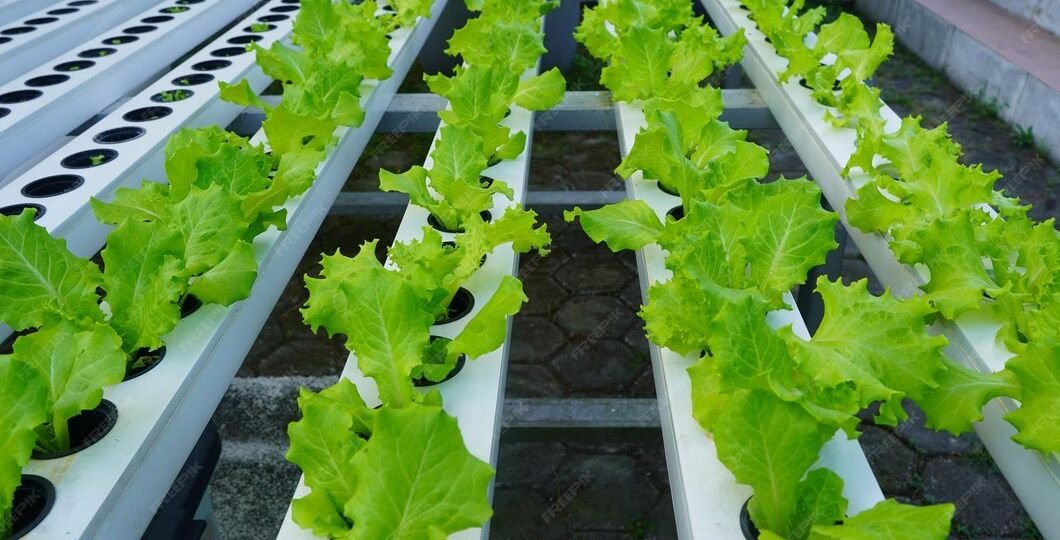
Hydroponic Farming at Home — Complete Step by Step Guide 2026
Growing your own food at home sounds like a dream for most people. But what if we told you that thousands of people around the world are already doing it — without any garden, without any soil, and without any farming experience?
Hydroponic farming at home is changing the way people think about food. Instead of depending on supermarkets and local vendors for fresh vegetables, people are now setting up small hydroponic systems in their kitchens, balconies, living rooms, and terraces — and harvesting fresh food whenever they want. The best part? You do not need to be a farmer or a scientist to do this. You just need the right system, the right guidance, and the desire to grow your own food.
In this complete step by step guide, InHydro will walk you through everything — from understanding what hydroponic farming at home actually means to setting up your first system and harvesting your first crop.
By the end of this guide you will know exactly what to do, what to buy, and how to get started with hydroponic farming at home today.
What is Hydroponic Farming at Home?
Hydroponic farming at home is a method of growing plants indoors or in small spaces without using soil. Instead of soil, plants grow in a nutrient-rich water solution that delivers everything a plant needs directly to its roots. In traditional farming, plants spend a lot of energy searching for nutrients in soil. In hydroponic farming, nutrients are delivered directly to the roots. This means plants grow faster, healthier, and produce more food in less space. At home, hydroponic farming can be set up in almost any space. A small balcony, a corner of your kitchen, a spare room, or a sunny terrace can all be transformed into a productive hydroponic garden. The water used in hydroponic systems is recycled continuously, which means hydroponic farming at home uses up to 90 percent less water than traditional soil farming.
Key Facts About Hydroponic Farming at Home:
- No soil is needed at any stage of growing
- Plants grow 30 to 50 percent faster than in soil
- Uses 90 percent less water than traditional farming
- Can be done in spaces as small as 2 square feet
- Produces fresh food all year round regardless of season
- No harmful pesticides or chemicals needed
- Fresh food available right in your own home
Why You Should Try Hydroponic Farming at Home
People around the world are turning to hydroponic farming at home for many different reasons. Here are the most important ones:
1. Fresh Food Every Single Day
When you grow food hydroponically at home, you harvest only what you need and when you need it. There is no transportation, no storage, no wilting in a warehouse. Every vegetable and herb you pick is at its peak freshness and nutrition.
2. Complete Control Over What You Eat
In commercial farming, vegetables are often sprayed with pesticides, wax, and preservatives to make them look fresh longer. When you grow your own food hydroponically at home, you know exactly what goes into your plants. No chemicals, no pesticides, no harmful additives.
3. Grow Food in Any Space
One of the biggest reasons people are attracted to hydroponic farming at home is that it works in any space. You do not need a garden or a farm. A small apartment balcony, a kitchen counter, or even a spare corner of a room is enough to grow fresh herbs, lettuce, spinach, and even tomatoes.
4. Save Money on Groceries
Fresh organic vegetables are expensive everywhere in the world. A medium home hydroponic setup can produce vegetables worth significantly more than the cost of running the system. Over time, hydroponic farming at home saves a meaningful amount on monthly grocery bills.
5. Help the Environment
Hydroponic farming at home has a very small environmental footprint. It uses very little water, produces no soil erosion, requires no pesticides, and can be powered by renewable energy. Growing food at home also eliminates the carbon footprint of transporting vegetables from farms to supermarkets to your table.
6. Year Round Growing
Traditional farming depends on seasons and weather. Hydroponic farming at home gives you complete control over the growing environment. You can grow any vegetable any time of year — summer or winter, rainy season or dry season.
How Much Does Home Hydroponic Setup Cost?
| Setup Type | System | Plants | Space | Best For | Difficulty |
|---|---|---|---|---|---|
| Beginner | Wick System or Small NFT | 10 to 20 plants | 2 x 2 feet | Herbs, Lettuce, Spinach, Microgreens | Very Easy |
| Medium Family | NFT System or DWC System | 30 to 60 plants | 4 x 4 feet | Lettuce, Spinach, Herbs, Basil, Coriander | Easy to Moderate |
| Advanced Home | Dutch Bucket or Automated NFT | 50 to 100+ plants | 10 x 10 feet | Tomatoes, Cucumbers, Peppers, Leafy Greens | Moderate |
| Cost Item | Beginner Setup | Medium Setup | Advanced Setup |
|---|---|---|---|
| Nutrient Solution | Very Low | Low to Medium | Medium |
| Electricity — Pump | Minimal | Low | Medium |
| Electricity — Grow Lights | Low | Medium | Medium to High |
| Seeds | Minimal | Low | Low to Medium |
| Growing Medium | One Time Cost | One Time Cost | One Time Cost |
| Total Monthly | Very Affordable | Manageable | Moderate Investment |
Need exact pricing? Contact InHydro today for a free consultation. We will recommend the perfect setup based on your space, budget, and growing goals.
Which Hydroponic System is Best for Home Use?
Choosing the right system is the most important decision when starting hydroponic farming at home. Here is a detailed comparison of the best systems for home use:
1. NFT System for Home
NFT stands for Nutrient Film Technique. A thin continuous film of nutrient solution flows through channels or pipes over the roots of plants. The roots absorb what they need and the excess flows back to the reservoir to be recirculated.
NFT is one of the most popular choices for hydroponic farming at home because it is efficient, easy to manage, and works perfectly for leafy greens and herbs which are the most commonly grown home crops.
- Best crops: Lettuce, spinach, basil, coriander, mint, kale
- Space needed: Compact — fits on a balcony shelf or countertop
- Maintenance: Low — easy daily checks
- Ideal for: Beginners and intermediate growers
- InHydro product: Hydroponics NFT Channels
2. Wick Pots for Beginners
Wick pots are the simplest and most beginner friendly hydroponic system available. A cotton or nylon wick draws nutrient solution from a reservoir up to the growing medium around plant roots through capillary action.
There is no pump, no electricity required for the system itself, and very little that can go wrong. This makes wick pots the perfect starting point for anyone new to hydroponic farming at home.
- Best crops: Herbs, small leafy plants, flowers
- Space needed: Minimal — fits on a windowsill or kitchen counter
- Maintenance: Very low — check water level every few days
- Ideal for: Absolute beginners, children, small spaces
- InHydro product: Hydroponic Wick Pots
3. Dutch Bucket System for Large Plants
Dutch bucket system uses individual large buckets filled with growing medium. A drip irrigation system delivers nutrient solution to each bucket and excess drains back to the reservoir. This system is ideal for growing large fruiting plants that need more space and support for their root systems.
If you want to grow tomatoes, cucumbers, or peppers at home hydroponically, dutch bucket system is your best choice.
- Best crops: Tomatoes, cucumbers, peppers, eggplant, beans
- Space needed: Medium to large — terrace or large balcony
- Maintenance: Moderate — regular checks needed
- Ideal for: Home growers wanting to grow fruiting vegetables
- InHydro product: Hydroponics Dutch Buckets
4. DWC System for Fast Growth
DWC stands for Deep Water Culture. Plant roots hang directly in a reservoir of oxygenated nutrient solution. An air pump continuously oxygenates the water to prevent roots from drowning and to stimulate fast growth.
DWC is known for producing some of the fastest growing results in home hydroponic farming because roots have constant direct access to both oxygen and nutrients simultaneously.
- Best crops: Lettuce, herbs, leafy greens
- Space needed: Small to medium
- Maintenance: Easy once set up
- Ideal for: Growers who want fast results
- Available through InHydro grow supplies
| System | Best For | Difficulty | Space | Speed |
|---|---|---|---|---|
| Wick Pots | Herbs, Beginners | Very Easy | Tiny | Slow |
| NFT System | Leafy Greens | Easy | Small | Fast |
| DWC System | Lettuce, Herbs | Easy | Small | Very Fast |
| Dutch Bucket | Tomatoes, Peppers | Moderate | Medium | Moderate |
Best Crops to Grow at Home Hydroponically
Not all crops are equally suited for hydroponic farming at home. Here are the best crops ranked by ease of growing and speed of harvest:
| Crop | Harvest Time | Best System | Difficulty | Light Needed | Practical Use |
|---|---|---|---|---|---|
| Microgreens | 7 to 14 days | Simple Tray | Very Easy | 12 hours | Salads, Smoothies |
| Herbs | 21 to 35 days | Wick Pots or NFT | Very Easy | 10 to 12 hours | Daily Cooking |
| Lettuce | 30 to 45 days | NFT or DWC | Very Easy | 12 to 14 hours | Salads, Wraps |
| Spinach | 40 to 50 days | NFT System | Easy | 12 hours | Cooking, Smoothies |
| Strawberries | 60 to 90 days | NFT or Tower | Moderate | 14 to 16 hours | Fresh Eating, Desserts |
| Tomatoes | 60 to 90 days | Dutch Bucket | Moderate | 14 to 16 hours | Cooking, Salads, Sauces |
Pro Tip: Always start with microgreens or herbs for your first crop. They grow fastest, need the least maintenance, and give you the confidence to expand your home hydroponic setup.
Step by Step Guide to Set Up Hydroponics at Home
Step 1 — Choose Your System
Your first decision is choosing which hydroponic system to use. For complete beginners we always recommend starting with either wick pots or a small NFT system. Both are simple, affordable, and forgiving of beginner mistakes.
Ask yourself these questions before deciding:
- How much space do I have available?
- What is my starting budget?
- What do I want to grow?
- How much time can I dedicate each day?
- Do I want a simple manual system or an automated one?
Once you have answered these questions, contact InHydro and our team will recommend the perfect system for your specific situation.
Step 2 — Set Up Your Growing Space
Choose a location in your home that meets these basic requirements:
Natural light or space for grow lights — plants need 10 to 16 hours of light per day depending on the crop. Access to a water source nearby for easy refilling. Good air circulation to prevent mold and promote healthy plant growth. A flat stable surface for your system. An electrical outlet nearby if you are using a water pump or grow lights.
Clean the space completely before setting up. Remove any dust, insects, or debris. This prevents contamination of your nutrient solution and protects your plants from pests.
Step 3 — Prepare Your Nutrient Solution
The nutrient solution is the heart of hydroponic farming at home. This is what feeds your plants and determines how healthy and productive they are.
How to prepare your nutrient solution correctly:
- Start with clean water — filtered or RO water works best
- Add hydroponic nutrients according to the dosage instructions
- Mix thoroughly until completely dissolved
- Check the pH level using a pH meter — target range is 5.5 to 6.5 for most crops
- Check the EC level using an EC meter — target range is 1.2 to 2.4 for most home crops
- Adjust pH up or down using pH adjustment solutions if needed
- Fill your reservoir with the prepared solution
InHydro provides complete nutrient kits with clear step by step mixing instructions suitable for all water types.
Step 4 — Plant Your Seeds or Seedlings
You have two options for starting plants — from seeds or from seedlings. Starting from seeds is more economical. Using seedlings saves time.
Starting from seeds:
- Soak rockwool cubes or coco coir plugs in pH balanced water for one hour before use
- Place one to two seeds in each cube or plug
- Keep in a warm location away from direct light for 24 to 72 hours
- Once seeds germinate and sprout, move to a location with light
- When roots become visible at the bottom of the cube, your seedling is ready to transplant into your hydroponic system
Step 5 — Monitor and Maintain Daily
Once your system is running, daily maintenance takes just 5 to 10 minutes. This is one of the biggest advantages of hydroponic farming at home compared to soil farming.
Daily checks — 5 minutes:
- Check water level in reservoir and top up if needed
- Check that pump and timer are working correctly
- Look at plants for any signs of yellowing, wilting, or pests
- Make sure grow lights are on the correct schedule
What Equipment Do You Need for Home Hydroponics?
Here is the complete equipment list for hydroponic farming at home:
| Equipment | Purpose | Why You Need It |
|---|---|---|
| Hydroponic System | Main growing structure | Core of your setup |
| Net Pots | Hold plants in system | Supports root development |
| Growing Medium | Supports roots | Rockwool, clay pebbles, or coco coir |
| Nutrient Solution | Feeds plants | Essential for plant growth |
| pH Meter | Measures water acidity | Wrong pH kills plants |
| EC Meter | Measures nutrient strength | Prevents over or under feeding |
| pH Up Solution | Raises pH level | Keeps pH in correct range |
| pH Down Solution | Lowers pH level | Keeps pH in correct range |
| Seeds or Seedlings | Starting plants | Beginning of your crop |
| Grow Lights | Provides light indoors | Essential without natural sunlight |
| Timer | Automates lights and pump | Maintains consistent schedule |
| Air Pump | Oxygenates water in DWC | Prevents root rot |
| Thermometer | Monitors temperature | Optimal growth range 18 to 26 degrees |
Common Mistakes Beginners Make in Home Hydroponics
Mistake 1 — Ignoring pH Levels – pH is the single most important factor in hydroponic farming at home. If pH goes outside the range of 5.5 to 6.5 your plants cannot absorb nutrients even if they are present in the water. Always check pH daily when starting out. A good pH meter from InHydro makes this quick and easy.
Mistake 2 — Using Too Many Nutrients – More nutrients does not mean faster growth. Too many nutrients causes nutrient burn which damages roots and stunts growth. Always follow the recommended dosage on your hydroponic nutrients bottle exactly.
Mistake 3 — Not Enough Light- Most home spaces do not get enough natural light for productive hydroponic growing. If your space gets less than 6 hours of direct sunlight per day invest in hydroponic grow lights immediately. Insufficient light leads to weak plants with very little production.
Mistake 4 — Poor Air Circulation – Stagnant air creates perfect conditions for mold and disease. A simple small fan circulating air around your plants makes a huge difference to plant health and productivity.
Mistake 5 — Starting Too Large- Start small with wick pots or a small NFT system. Master the basics first then expand gradually. Large complex systems overwhelm beginners and lead to expensive mistakes.
Mistake 6 — Not Changing Nutrient Solution – Old nutrient solution builds up salt deposits and becomes unbalanced. Always replace your nutrient solution completely every two weeks to keep plants healthy and productive.
Mistake 7 — Wrong System for Your Crops – Every system works best with specific crops. Wick pots work great for herbs but cannot grow tomatoes well. Dutch bucket system is perfect for tomatoes but unnecessary for lettuce. Always match your system to your crops before buying.
Pro Tip —The most successful home growers make one small change at a time. Never adjust pH and nutrients and lighting all at once. Change one thing, wait 48 hours, observe the result, then adjust the next thing if needed.
How Much Can You Save with Home Hydroponic Farming?
Here is a realistic savings breakdown for a family growing lettuce, herbs, spinach, and tomatoes at home hydroponically:
| Setup Size | Monthly Running Cost | Produce Value | Monthly Saving | Payback Period |
|---|---|---|---|---|
| Beginner | Very Low | Low to Medium | Small Saving | 6 to 9 months |
| Medium Family | Low to Medium | High | Good Saving | 9 to 12 months |
| Advanced Home | Medium | Very High | Best Saving | 12 to 18 months |
The hidden value of hydroponic farming at home goes far beyond what you save on groceries every month. When you grow your own food at home hydroponically you gain something that no supermarket can give you — complete confidence in what you are eating.
Every vegetable and herb you harvest from your home hydroponic system is 100 percent chemical free. No pesticides. No preservatives. No unknown additives. Just pure fresh food that you grew yourself. Beyond the health benefits there is a deep personal satisfaction that comes from growing your own food. Watching seeds germinate, roots develop, and plants produce fresh food in your own home is a genuinely rewarding experience that connects you back to nature even in the middle of a busy city life.
For families with children home hydroponic farming is also an incredible educational tool. Children who grow up understanding where food comes from, how plants grow, and how to care for a living system develop a healthier relationship with food and nature that stays with them for life.
And the best part — once your hydroponic farming at home setup is running it keeps giving back month after month, year after year, with very little effort required to maintain it.