







How to plan a Dutch bucket setup
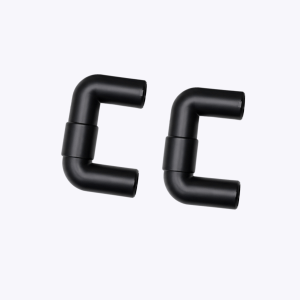
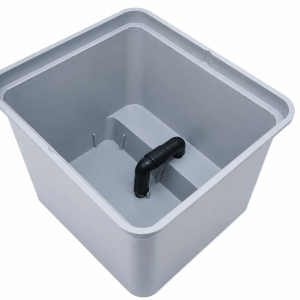
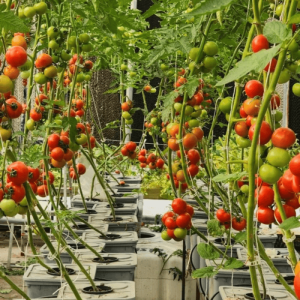
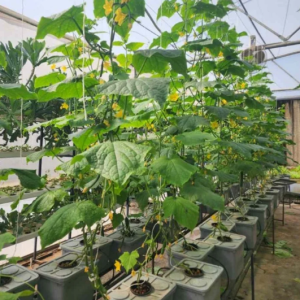
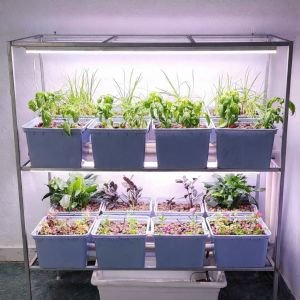
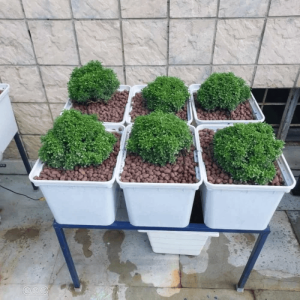
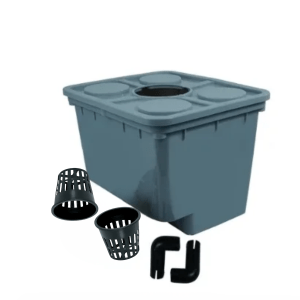
Dutch (Bato) buckets hold a growing medium such as perlite or coco peat and are fed by drip. The siphon elbow keeps a small water reserve at the bottom and drains the rest back to the tank. This makes them the best choice for large, long-season vine crops.
| Crop | Plants per bucket | Net cup |
|---|---|---|
| Tomato, cucumber, melon | 1 | 2-inch or 4-inch |
| Capsicum, chilli, brinjal | 1–2 | 2-inch or 4-inch |
| Strawberry, herbs | 2–3 | 2-inch |
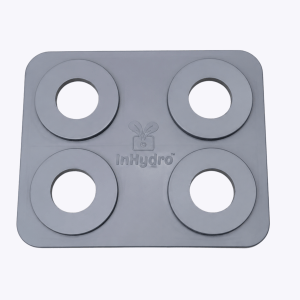
Rule of thumb: plan about 2.5–3 buckets per square metre with a vertical trellis. Use the 2-inch cup for small seedling plugs and the 4-inch cup for bigger transplants – both fit the same INHYDRO lid.
HDPE Dutch (Bato) buckets, bucket kits, lids and siphon elbows for tomato, cucumber, capsicum and other vine crops – single buckets to bulk farm supply.
Dutch Bucket Systems & Accessories – FAQs
What is a Dutch bucket system?
Dutch (Bato) buckets hold a growing medium such as perlite or cocopeat and are fed by drip. The siphon elbow keeps a small water reserve and drains the rest – ideal for tomato, cucumber, capsicum and other vine crops.
2-inch or 4-inch net cup – which one?
Use the 2-inch net cup for starting seedlings in smaller plugs and the 4-inch cup for larger transplants. Both fit the same INHYDRO bucket lid.
How many Dutch buckets do I need?
Usually one plant per bucket for tomato and cucumber, and up to two for capsicum. For farms we plan 2.5–3 buckets per square metre.