

Commercial Indoor NFT Hydroponic Farm
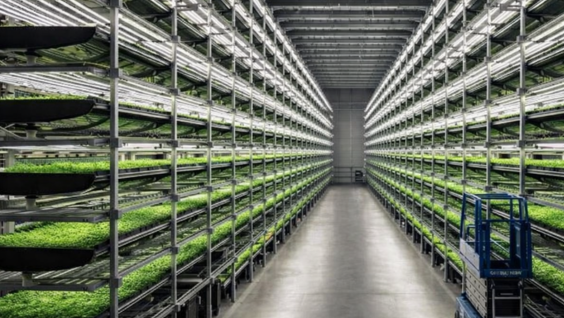
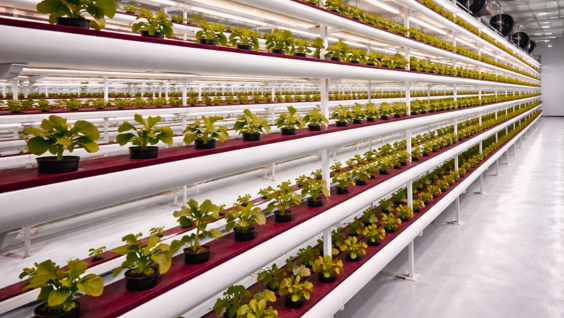
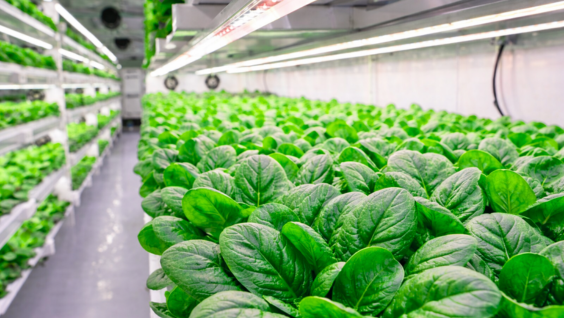
BEST CROPS FOR NFT (NUTRIENT FILM TECHNIQUE) SYSTEM
| Crop Category | Best Crops for NFT System |
|---|---|
| Leafy Greens (High Success Rate) | Iceberg Lettuce, Romaine Lettuce, Butterhead Lettuce, Kale |
| Fast-Growing Crops | Spinach, Arugula, Bok Choy |
| High-Profit Herbs | Basil (Genovese, Thai), Mint, Coriander, Parsley |
| Microgreens (Quick ROI) | Radish, Sunflower, Pea Shoots, Mustard |
| Premium Crops (Advanced Growers) | Strawberry, Baby Spinach, Exotic Lettuce Mix |
Why Choose InHydro for NFT Systems?
1️⃣ Specialized NFT Expertise
InHydro specializes in precision-engineered Nutrient Film Technique (NFT) systems optimized for commercial leafy greens and herb production. Our layouts utilize a scientific $1:30$ to $1:40$ slope to ensure uniform nutrient flow and maximum root zone oxygenation.
2️⃣ Premium Food-Grade NFT Channels
We manufacture FDA-approved, food-grade NFT channels using 100% virgin HDPE. These channels are UV-stabilized for a 40–50 year lifespan, ensuring a hygienic, chemical-free environment for high-quality crop production.
3️⃣ Scientifically Designed Flow System
Our systems maintain the ideal nutrient film thickness and integrate automated pH and EC monitoring. This high-precision recirculation maximizes growth rates while drastically reducing nutrient wastage.
4️⃣ High-Density Commercial Layouts
InHydro designs space-optimized installations for vertical farms and greenhouses, increasing plant capacity per square meter to boost ROI and profitability.
Our systems ensure efficient nutrient flow, proper aeration, and uniform light distribution for consistent crop performance. The modular design allows easy scalability while maintaining high yield, premium quality, and operational efficiency.
The InHydro Commercial Indoor NFT Hydroponic Farm is a fully controlled, soil-less farming system designed for high-density, high-yield commercial cultivation. Built using advanced Nutrient Film Technique (NFT), this system enables farmers and agri-entrepreneurs to grow premium leafy greens and herbs with maximum efficiency and minimum water usage.
Select Planter Capacity
Price: ₹ 42,29,400 Approx.
TECHNICAL REQUIREMENTS – COMMERCIAL NFT SYSTEM
(As per General Hydroponic & Controlled Environment Agriculture Standards)
| Parameter | Commercial NFT Technical Requirement |
|---|---|
| System Type | Nutrient Film Technique (NFT) Hydroponic Growing System |
| Application | Commercial leafy greens, herbs & exotic crop production |
| Structure Type | Installed inside Polyhouse / Net House / Climate Controlled Structure |
| Growing Channels | Food Grade UV Stabilized PVC NFT Channels (100mm–150mm width) |
| Channel Thickness | 1.6 mm industrial grade |
| Channel Spacing | 150–250 mm center-to-center spacing |
| Plant Spacing | 150-160 cm depending on crop |
| Reservoir Tank | Food Grade HDPE Tank (500–2000 Liters depending on area) |
| Water Pump | Submersible Pump (0.5–1 HP depending on layout) |
| Flow Rate | 1–2 Liters per minute per channel |
| Nutrient Delivery | Continuous thin film nutrient circulation |
| Return System | Gravity-based return to main reservoir |
| Filtration Unit | Inline Disc / Screen Filter (100–130 micron) |
| Automation (Optional) | EC, pH Controller with Dosing Pump System |
| pH Range | 5.5 – 6.5 (Crop dependent) |
| EC Range | 1.0 – 2.2 mS/cm (Crop dependent) |
| Growing Media | Net Pots with Cocopeat / Rockwool / Hydroton |
| Support Structure | GI / Aluminum Frame Support for NFT Channels |
| UV Protection | UV Stabilized Channels & Pipes |
| System Lifespan | 8–12 Years (Structure), 4–6 Years (Channels) |
| Drainage System | Closed-loop recirculating system |
| Water Consumption | 80–90% less compared to soil farming |
| Suitable Crops | Lettuce, Basil, Spinach, Kale, Microgreens, Strawberry (Advanced) |
| Maintenance Requirement | Weekly EC/pH monitoring & monthly system cleaning |
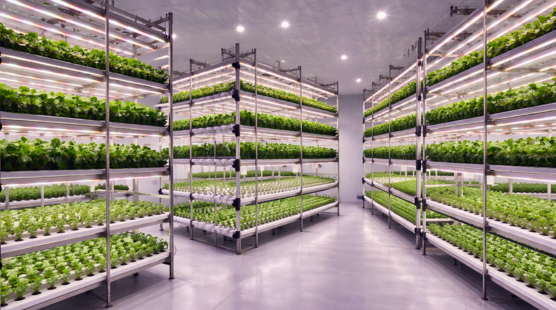
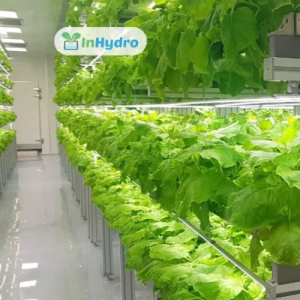
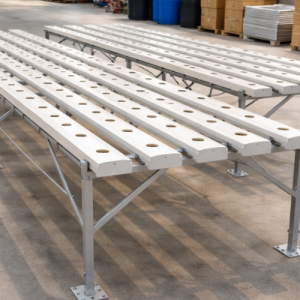
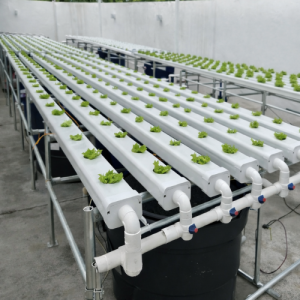
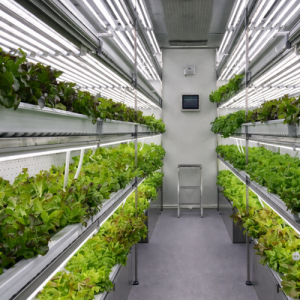
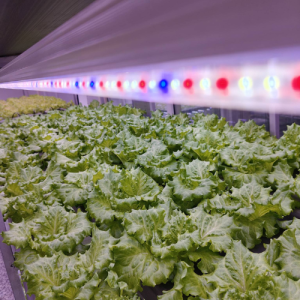
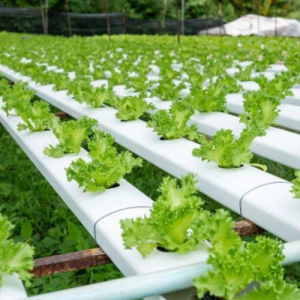
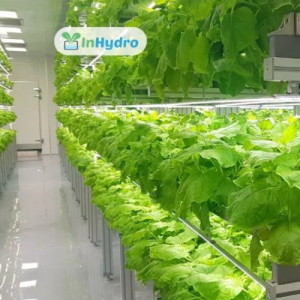
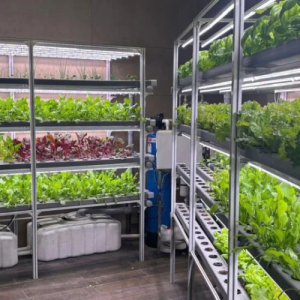
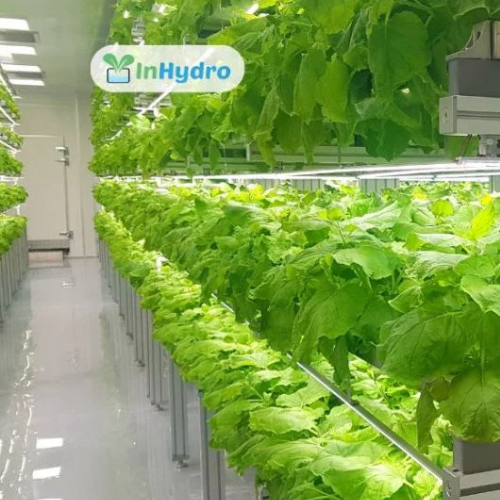
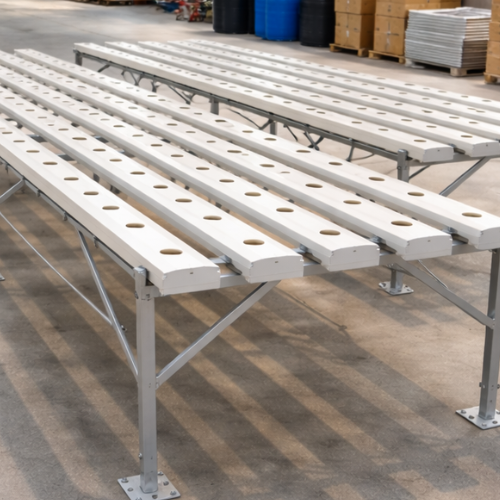
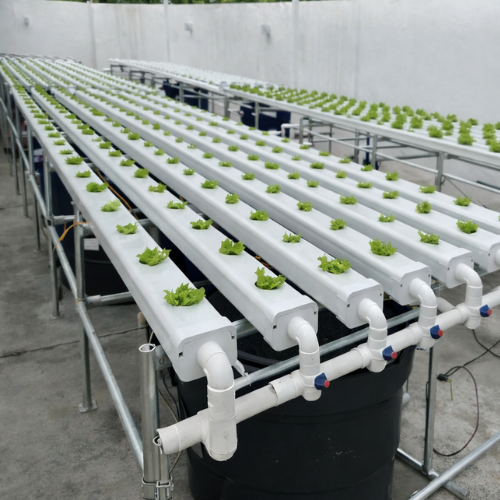
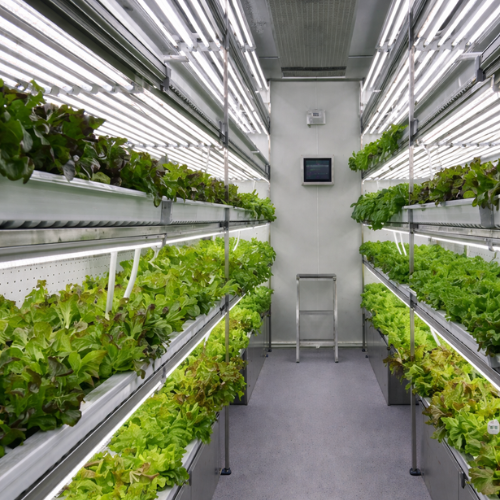
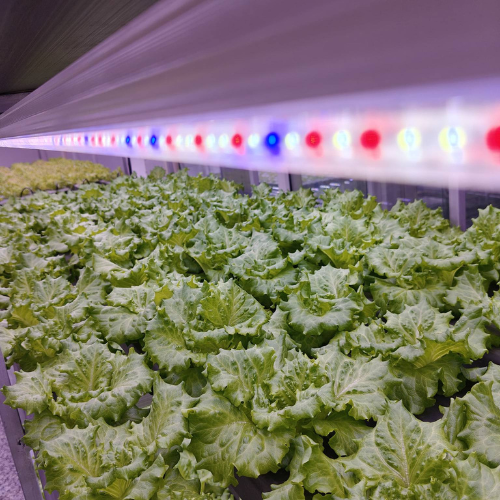
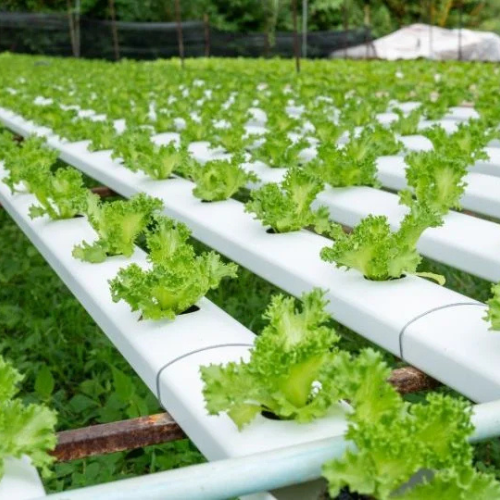
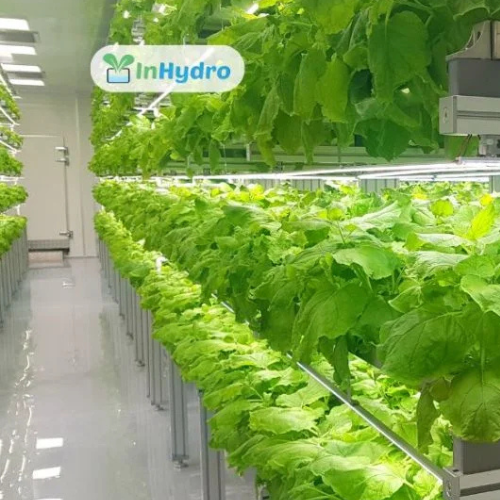
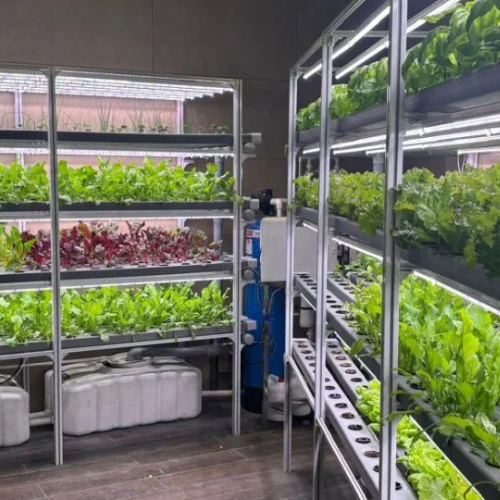
Project Gallery: NFT (NUTRIENT FILM TECHNIQUE) SYSTEM
STANDARD SIZES WITH INDICATIVE PRICING – NFT HYDROPONIC SYSTEM
The pricing detailed below represents the baseline Capital Expenditure (CAPEX) for our professional-grade commercial NFT hydroponic setups. While these figures serve as a standard guide for high-density leafy green production, final project costs are dynamic and customized based on your specific requirements—including polyhouse or greenhouse structure type, levels of IoT-enabled automation, and nutrient reservoir capacity. Our turnkey NFT packages include premium UV-stabilized channels, heavy-duty support structures, and high-efficiency fertigation plumbing. Additionally, most installations are eligible for government agricultural subsidies of up to 50%, significantly improving your ROI and operational profitability from the first harvest.
| No. of Plants | Approx. Area | Total Price (₹) |
|---|---|---|
| 10,000 | ~1100 Sqft | ₹42,29,400 |
| 20,000 | ~2200 Sqft | ₹77,91,000 |
| 30,000 | ~3300 Sqft | ₹11448000 |
The InHydro Commercial NFT Advantage
Engineered for High-Density Commercial Yields
The InHydro Nutrient Film Technique (NFT) System is a precision-engineered soilless farming solution designed for the intensive cultivation of leafy greens, herbs, and exotic crops. At its core, the system utilizes the "Thin Film Theory," where a shallow, continuous stream of nutrient-rich water flows over the bare roots of plants. This unique architecture ensures that roots are simultaneously bathed in nutrients while being exposed to atmospheric oxygen, preventing "root drowning" and accelerating growth cycles by up to 50% compared to traditional soil.
Material Excellence & Food Safety
Authority in 2026 is built on safety and durability. Unlike standard PVC pipes, InHydro channels are manufactured from 100% virgin, FDA-approved, food-grade HDPE.
-
Lead-Free & BPA-Free: Our channels are inert, ensuring zero chemical leaching into your crop even in high-temperature greenhouse environments.
-
UV-Stabilized Longevity: Engineered with specialized UV inhibitors, these channels boast a 40–50 year operational lifespan, making them a one-time capital investment for your agribusiness.
-
Opaque Algae Prevention: The multi-layered design blocks 100% of light, naturally inhibiting algae growth and maintaining a sterile environment without chemical intervention.
Scientific Flow Dynamics & Precision Control
-
Optimized 1:30 Slope: Every InHydro installation is calibrated to a specific slope ratio (typically $1:30$ to $1:40$) to ensure gravity-fed return without nutrient stagnation or "ponding," which is the leading cause of root pathogens like Pythium.
-
Automated Fertigation: The system is built for IoT integration, allowing for real-time monitoring of pH (target 5.5–6.5) and EC (target 1.2–2.5). This precision ensures that your plants are always in the "Goldilocks Zone" for nutrient uptake.
-
Root Zone Aeration: By maintaining a film thickness of only $1–3\text{mm}$, we maximize dissolved oxygen levels, resulting in crispier, more nutrient-dense produce that commands premium market prices.
| Weight | 18.5 kg |
|---|---|
| Channel Materia | FDA-Approved, HDPE |
| Flow Rate | 1–2 Liters per minute |
| Structural Steel | Hot-Dip Galvanized (HDG) |
| Automation Ready | IoT / Bluelab Integration |
| Modular Expansion | A-Frame or Stacked Horizontal |
| Manufacture | InHydro |
| Water Efficiency | Closed-Loop Recirculation |
Add a review Cancel reply
ADDITIONAL TECHNICAL SPECIFICATIONS – NFT (NUTRIENT FILM TECHNIQUE) SYSTEM
The InHydro NFT (Nutrient Film Technique) System is a precision-engineered hydroponic cultivation system designed for high-density commercial leafy green production. The system operates on a continuous recirculating nutrient flow mechanism, ensuring optimal root oxygenation, uniform nutrient distribution, and efficient water utilization.
The structure and hydraulic design are developed to ensure durability, ease of maintenance, and maximum yield under controlled environment conditions such as Polyhouse, Fan & Pad Greenhouse, and Indoor Farming Units.
KEY TECHNICAL FEATURES
- Up to 80–90% Water Conservation Enabled by Advanced Closed-Loop Nutrient Recirculation Technology
- Precision-Engineered Uniform Nutrient Distribution System Ensuring Balanced Growth Across All Cultivation Channels
- Scientifically Designed Enhanced Root Oxygenation Mechanism for Accelerated Vegetative Development
- Fully Modular, Structurally Expandable, and Commercially Scalable NFT System Architecture
- High-Density Crop Cultivation Model Optimized for Maximum Yield Per Square Meter
- Advanced Soil-Free Hydroponic Growing Technology with Minimal Media Dependency
- Commercial-Grade Production Efficiency Designed for Large-Scale Controlled Environment Farming
- Consistent, Predictable, and Year-Round Harvest Cycle Optimization for Continuous Market Supply
1️⃣ STRUCTURAL SPECIFICATIONS
| Structural Member | Outer Diameter | Thickness | Material | Remarks |
|---|---|---|---|---|
| Main Support Frame | 20 x 20 mm | 1.6 mm | HDG GI Steel | Primary load-bearing structure for NFT racks |
| Vertical Support Legs | 20 x 20 mm | 1.6 mm | HDG GI Steel | Supports horizontal NFT channel structure |
| NFT Channel Support Rail | 20 x 20 mm | 1.6 mm | GI Steel | Holds growing channels with proper alignment |
| Cross Bracing Support | 20 x 20 mm | 1.6 mm | GI Steel | Provides structural stability & load balance |
| Multi-Layer Rack Frame | 20 x 20 mm | 1.6 mm | HDG GI Steel | Designed for vertical NFT growing systems |
| Reservoir Tank Stand | 20 x 20 mm | 1.6 mm | GI Steel | Supports nutrient solution tank load |
| Channel Mounting Clamps | Heavy Duty | — | Corrosion Resistant | Secures channels firmly in position |
| Fasteners & Connectors | Standard | — | Galvanized | Rust-resistant for long-term durability |
2️⃣ NFT Channel Specifications
| Parameter | Specification |
|---|---|
| Channel Width | 4 X 2 Inches |
| Channel Length | 3–6 Meters (Project Dependent) |
| Net Pot Size | 2” |
| Plant Spacing | 150-160 mm (Center to Center) |
| Channel Slope | 1–3% Gradient for Uniform Flow |
| Expected Channel Life | 5–7 Years |
3️⃣ Nutrient Circulation & Hydraulic System
| Parameter | Specification |
|---|---|
| Pump Type | Energy Efficient Submersible Pump |
| Flow Rate | 1–2 Liters per Minute per Channel |
| Nutrient Tank Capacity | 500L – 2000L (Project Size Dependent) |
| Operating Mode | Continuous / Timer Controlled |
| Water Saving Efficiency | Up to 80–90% |
4️⃣ Electrical & Automation Specifications
| Parameter | Specification |
|---|---|
| Timer Control | Programmable Digital Timer |
| Automation Option | Automatic Nutrient Dosing (Optional) |
| Monitoring System | pH & EC Meter Integration |
| Power Requirement | Single Phase / Three Phase (Project Dependent) |
Yes, but profitability is a factor of Market Linkage and Crop Density. Unlike traditional farming, an InHydro NFT system allows for 10–12 harvest cycles per year. By targeting B2B segments (hotels, cloud kitchens, and gourmet retailers) where “Pesticide-Free” produce commands a 30–50% premium, growers can achieve higher margins. Efficiency in water and nutrient use further reduces OPEX, making it one of the most sustainable agribusiness models in the 2026 market.
The typical break-even point for a professionally managed 1,000 sq. m. project is 2.5 to 4 years. This calculation includes your initial Capital Expenditure (CAPEX) for the greenhouse and NFT hardware. The timeline can be reduced by ~30% if you secure a government subsidy and focus on “High-Velocity” crops like Italian Basil or Romaine Lettuce, which have a fast seed-to-sale turnaround.
Standard PVC pipes often contain lead and phthalates which can leach into the nutrient solution at temperatures above $28°C$. InHydro uses Lead-Free, FDA-approved HDPE/uPVC. Our channels are UV-stabilized to prevent brittleness and chemical breakdown under intense tropical sun, ensuring your “Food-Safe” certification remains valid for the 15–50 year life of the equipment.
Algae requires light to grow. Our channels are co-extruded with a specialized opaque inner layer that blocks 100% of light. By keeping the nutrient solution in total darkness, we eliminate the primary cause of algae, which otherwise competes for oxygen and attracts pests like Fungus Gnats.
If the slope is too flat (<1%), water “ponds,” leading to stagnant zones and root rot (Pythium). If it is too steep, the water moves too fast for the roots to drink. We calibrate our support structures to a precise gradient that maintains a 1–3mm “Thin Film” of water, ensuring the top of the root system is always exposed to oxygen while the bottom is always fed.
High water temperature (>30°C) cannot hold dissolved oxygen, causing “root drowning.” We mitigate this through:
White-topped channels to reflect solar heat.
Insulated nutrient reservoirs (underground or double-walled).
Evaporative cooling within the greenhouse structure to maintain an ambient temperature $5–10°C$ lower than the outside.
NFT is designed for crops with small, fibrous root systems. Lettuce, Basil, Kale, and Spinach thrive because they don’t require the physical support of heavy media. Since these crops are almost 95% water, the continuous flow of the NFT system ensures they remain crisp and nutrient-dense, leading to a higher market weight.
For most leafy greens, you must maintain a pH of 5.5 to 6.5 and an EC (Electrical Conductivity) of 1.2 to 2.5 mS/cm. If the pH drifts out of this range, “Nutrient Lockout” occurs—the nutrients are in the water, but the plant cannot “see” or eat them. Our IoT systems monitor this 24/7 to prevent crop loss.
We offer A-Frame (Vertical) and Flat-Bed (Horizontal) layouts. By utilizing vertical space and precise channel spacing ($20\text{cm}$ center-to-center), we can fit up to 10–15 plants per square meter, which is 3x to 5x higher than open-field agriculture.
Yes. We handle everything from Site Feasibility and Polyhouse Construction to System Installation and Agronomy Training. We don’t just leave you with the hardware; we provide the nutrient recipes and harvest schedules needed to turn your first profit.
Absolutely. Our 2026 models are “AI-Ready.” By connecting our sensors to an AI dashboard, the system can predict nutrient deficiencies before they show up on the leaves, optimize lighting/cooling schedules to save power, and even estimate your harvest weight weeks in advance.
A commercial system requires a disciplined maintenance hierarchy to prevent the buildup of biofilm (a bacterial slime layer) and mineral salts, which can lead to pump failure or crop disease.
Weekly “Sanitization”: This involves a routine walkthrough to check for “hot spots”—clogged emitters, leaks, or algae patches. We recommend cleaning the inline disc filters (100–120 micron) and wiping down the exterior of the channels to maintain high reflectivity and hygiene.
Monthly “System Audit”: Completely drain the nutrient reservoir to remove accumulated sediment. Inspect the water pumps for any unusual noise or vibration and descale the impeller if you live in a hard-water area. This “reset” ensures your nutrient balance (EC/pH) remains accurate.
Post-Harvest “Sterilization”: This is the most critical step. Between harvest cycles, the entire system must be flushed with a food-safe sterilizing agent—typically Hydrogen Peroxide ($H_2O_2$) or a mild bleach solution ($500\text{ppm}$ NaOCl). This “Deep Clean” kills any lingering microbial pathogens and breaks down organic residue, providing a “Zero-Risk” start for your next crop of seedlings.
Integrated Pest Management (IPM) for NFT Systems
Our commercial IPM strategy is built on four pillars to ensure a “Clean Label,” pesticide-free harvest:
1. Bio-Security & Prevention: We maintain a “sterile-first” environment. By keeping the root zone at 18–22°C and utilizing UV Sterilization or $H_2O_2$ micro-dosing, we eliminate Pythium (Root Rot) and algae before they can colonize the system.
2. Biological Controls (BCA): We deploy “beneficial” microbes like Trichoderma and Bacillus subtilis to create a protective biological shield around the roots, physically blocking pathogens through competitive exclusion.
3. Mechanical Barriers: All InHydro structures feature 40/50-mesh insect netting and air-locked entries to exclude airborne vectors like Thrips and Whiteflies. We use Sticky Traps as an early-detection “radar” to monitor pest activity 24/7.
4. Botanical Remedies: For localized issues, we use cold-pressed Neem Oil and potassium soaps. These disrupt pest growth and feeding patterns without leaving chemical residues, ensuring your produce remains safe and market-ready.
Contact Us For More Information Regarding our Hydroponic projects with our team which consists of experts and well-trained professionals to provide services of the highest quality.
Reviews
There are no reviews yet.